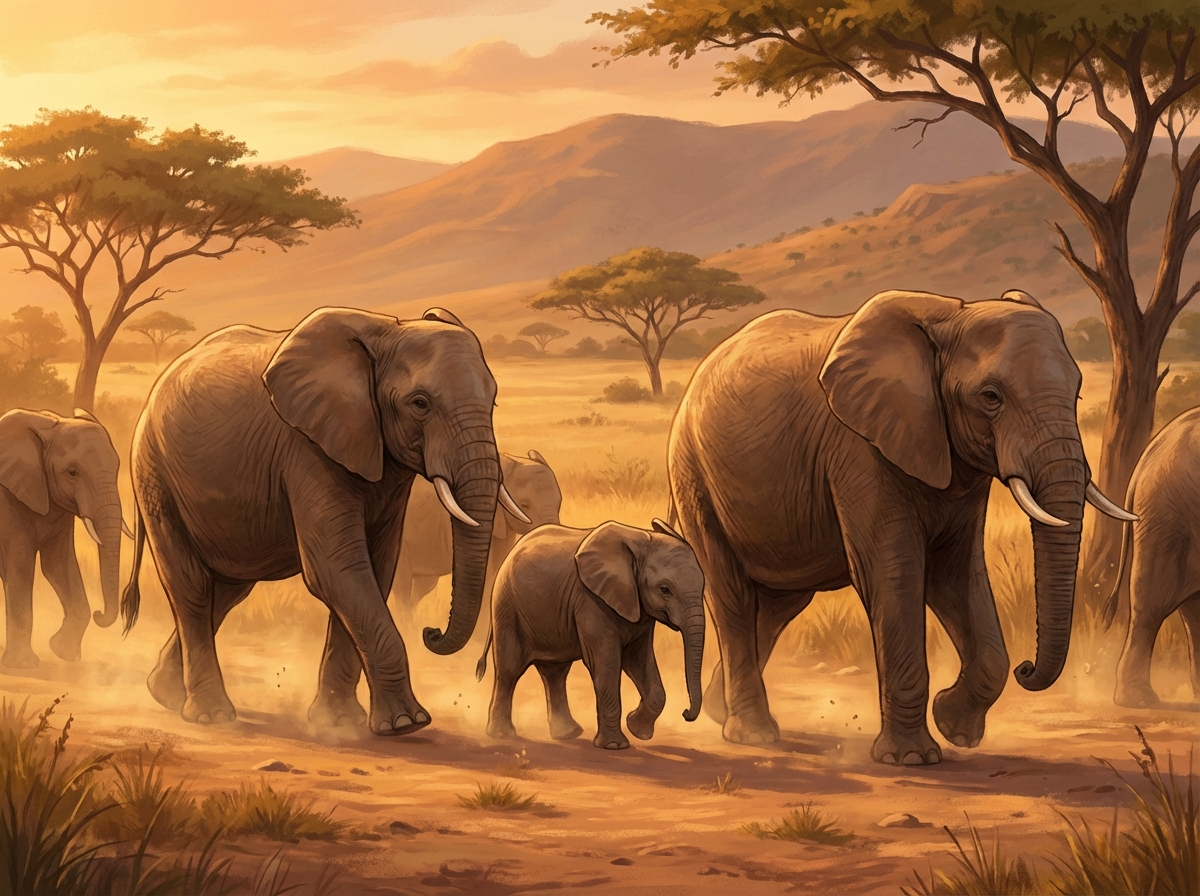
Dust hangs in the air, the herd is somewhere nearby, and one young elephant has drifted into the wrong place. This mission is about memory, family, and knowing when to give a herd space.
Story setup
The trail is dusty and warm, and the ground is stamped with old footprints. Broken branches crack under your boots, and the smell of dry grass hangs in the air. Then you see fresh tracks, huge ones, and smaller ones mixed together.
Near a cluster of bushes stands a young elephant named Hope. She has drifted away from the herd. Her ears flap nervously, and she swings her trunk as if trying to catch a familiar scent.
Elephants are smart, social, and protective. If Hope is alone, her family is probably not far away, and that means this situation could become dangerous fast if you crowd it.
Your mission is to help from a safe distance and make smart choices that protect Hope and her herd.
Mission score:0/4
Start the mission
Mission toolsTrack signs, listen carefully, move slowly, respect the herd
Learning goalUnderstand how elephants communicate, protect each other, and remember routes across the landscape
Mission pressureA separated calf, a protective herd, and the real risk of turning a reunion into a charge
Start missionHope follows the signs, sounds, and memory of her herd.
Rescue step 1
Read the tracks
🐾
Hope is anxious and the herd is not in sight. Dust hangs over the trail, branches are still moving, and somewhere out there her family may already be looking for her. What should you do first?
What you learned
Elephants leave clues everywhere, tracks, broken branches, rubbed bark, and even dung can show where the herd moved. Good trackers read the whole trail, not just one footprint.
You hear low rumbles in the distance, deep enough to feel more than hear. Hope lifts her head. For a second the whole savanna feels like it is listening with you.
What you learned
Elephants communicate with low rumbles that can travel over long distances. Some of those sounds are so deep that more of the message moves through the ground than through the air.
Hope starts moving toward a narrow patch between bushes, trunk lifted, as if she has caught a clue from the wind. If you crowd her now, you could turn a reunion path into a panic path.
What you learned
Young elephants rely on the herd for protection. Calm space helps them reconnect better than human interference, especially when a calf is trying to follow sound, scent, and memory.
A large female elephant appears ahead, massive and steady. She is likely the matriarch leading the herd, and she has already noticed everything. This is the moment where the rescue stops being about you and starts being about whether the herd feels safe enough to take Hope back.
What you learned
Elephant herds are often led by experienced females called matriarchs. They help guide the family, remember routes to water, and protect the young when danger appears.
You stay calm, follow the signs, and give Hope the space she needs.
Soon the herd gathers around her. The matriarch rumbles softly, Hope hurries forward, and the other elephants close around her like a moving wall of protection.
You helped Hope the Young Elephant by observing, thinking ahead, and respecting the herd instead of forcing the moment.
Explorer reward unlockedElephant Explorer badge earned. Herd logic upgraded.
Mission result
You used the same instincts a good field guide would use: notice clues, trust patterns, and never crowd the animal.
What you learned
Elephants are social, smart, and deeply connected. Helping them often means understanding the whole family, not just one animal, because the herd itself is part of the rescue.
You unlocked the Elephant Herd Memory mini game on the progress page. Finish more missions to unlock more challenges.
Adventure result
You solved this one by reading the herd, respecting distance, and noticing what the land was telling you.
Discussion question
Why was giving Hope space safer than trying to lead her yourself?
What kids learned
Elephants communicate with sounds and vibrations that can travel across surprising distances
Young elephants depend on the herd for safety, learning, and direction
Matriarchs help lead the herd and remember important routes
Observation is safer than rushing in when a large animal family is nearby
Helping wildlife often means giving space instead of taking control
Badges earned
Elephant Explorer
Trunk Tracker
Elephant Expert
Parent and teacher note
This mission teaches observation, herd behavior, animal communication, and the idea that helping wildlife often means reducing pressure, not taking over.
Skills practiced: clue-reading, patience, distance judgment, and cause-and-effect thinking.
Science concept: elephants use sound, vibration, memory, and social structure to stay connected and protect young animals.
Classroom extension: ask students to map the clues Hope followed, then write one paragraph explaining why the matriarch changes the rescue strategy.