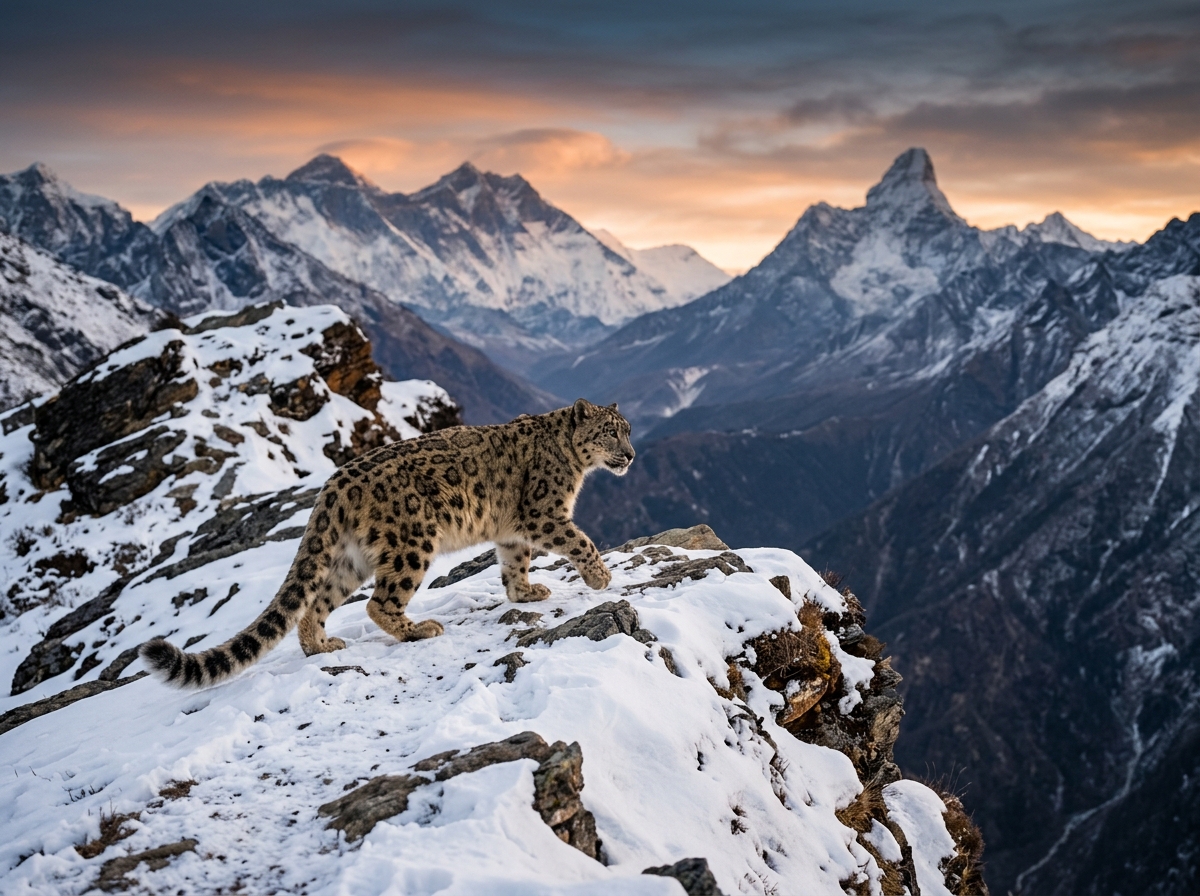
The air is thin, the ridge is dangerous, and an injured snow leopard is somewhere ahead of you in the fading light. This mission is longer, harder, and built like a real rescue adventure.
Mission briefing
The higher you climb into Mooncliff Ridge, the quieter the world gets. Snow skitters over stone. The wind cuts across the trail. Far below, the last sunlight is draining out of the valley.
Then the radio crackles. A ranger below has spotted an adult snow leopard named Tashi limping near a cliff path. If he keeps moving the wrong way, he could fall, wander toward a village, or collapse before the rescue team can position safely.
That is what makes this hard. Tashi is not a cub. He is a powerful predator in his own territory, injured, alert, and one bad surprise away from making a dangerous choice.
Your mission is not to charge in like a hero. Your mission is to read the mountain, follow the clues, support the rescue team, and help Tashi reach safety without making a bad situation worse.
Mission score:0/6
Start the mission
Mission toolsTracks, wind direction, radio updates, safe distance, and calm decision-making
Learning goalUnderstand how rescuers protect powerful wildlife through tracking, restraint, habitat awareness, and patience under pressure
Mission pressureThin air, fading light, unstable footing, and an injured predator that cannot afford one more bad step
Reward pathBeat the hardest rescue cleanly, finish the strongest advanced mission, and give the whole Mission Wild path a real high-end finish
Start missionTashi is strong, quiet, and built for the mountains. That does not mean he is safe.
Rescue step 1
Read the first sign
🐾
You find fresh tracks in the snow leading toward a narrow ridge. One print is deeper than the others, as if Tashi is protecting a sore leg. The mountain is already telling you a story, but only if you slow down enough to read it.
What you learned
Snow leopard tracks can reveal direction, pace, and injury. A deeper print on one side may show pain or weakness in a limb. Their wide paws also help spread weight over snow, almost like natural snowshoes.
A ranger warns that the wind is shifting uphill toward the ridge, carrying your scent higher into the rocks. In this air, even an invisible mistake can race ahead of you.
What you learned
Rescue teams think about wind constantly. For animals with sharp senses, smell can change the entire outcome of an approach. A rescue can fail before the team is even seen.
You reach a split in the trail. One side gives a fast view from an exposed ledge. The other is slower but protected behind rocks. The mountain is offering you speed or safety, not both.
What you learned
Snow leopards live in broken rocky terrain where one bad movement can mean injury. Rescuers have to think about their own footing too.
You hear rocks tumble below. For a second it sounds like Tashi is moving downhill, but then you notice birds lifting sharply from a higher ridge line and circling away from one point in the snow. The mountain just threw you a false lead. Will you chase noise, or follow evidence?
What you learned
In the wild, indirect clues matter. Birds, loose stones, prey behavior, and even silence can reveal more than a direct sighting, especially with elusive animals like snow leopards.
You finally see Tashi. He is standing on a shelf of snow above a steep drop, holding one front paw off the ground. Even hurt, he looks powerful enough to own the whole ridge. That is exactly why crowding him now would be such a bad mistake.
What you learned
Real rescue work is often communication, patience, and position. The dramatic thing is not always the useful thing.
The rescue team reaches position below and shapes a calm route toward a safer slope. Tashi hesitates, tail low, shoulders tense, then tests the snow with one careful step. Everything depends on what happens in the next few seconds.
What you learned
Snow leopards are powerful and secretive. They are built for steep mountain life, with long tails for balance and thick fur for brutal cold. The best rescue outcome is usually one where the animal keeps its dignity and returns to safe habitat.
Tashi crosses the safer slope, disappears into a line of broken rocks, and vanishes back into the mountain. The team confirms he is moving away from the cliff and out of danger.
You helped rescue Tashi the Snow Leopard by thinking like a tracker, communicating like a ranger, and staying calm when the mountain tried to rush you.
Mission result
You solved a harder rescue without turning it into chaos. You followed sign, respected the terrain, and helped the team make the safe move at the right time.
What you learned
Powerful animals still become vulnerable when injured, stressed, or pushed by terrain. Real rescue work is built on patience, distance, and information.
You unlocked the Snow Leopard Ridge Logic mini game on the progress page. It only opens after finishing the advanced mission.
Adventure result
You handled the hardest mission like a real field team member: calm, observant, and disciplined when the pressure was highest.
Discussion question
Which mattered more in this rescue, speed or control, and what clue proves it?
What kids learned
Tracks can reveal injury, direction, and pace
Wind matters in wildlife rescue
Indirect clues can be more useful than loud action
Powerful predators still need calm, careful protection
Real rescues depend on teamwork and communication
Badges earned
Snow Leopard Tracker
Mountain Rescue Scout
Cliffside Calm Expert
Parent and teacher note
This mission teaches animal tracking, habitat pressure, wind awareness, teamwork, and the discipline of helping wild animals without over-handling or escalating the scene. It is intentionally longer and more layered than the earlier stories.
Skills practiced: evidence comparison, radio communication, terrain judgment, and disciplined restraint.
Science concept: predators still become vulnerable when injury, wind, cold, and steep habitat start shaping every movement choice.
Classroom extension: have students rank the six rescue steps from most important to least important, then defend their order using one piece of evidence from the mission.