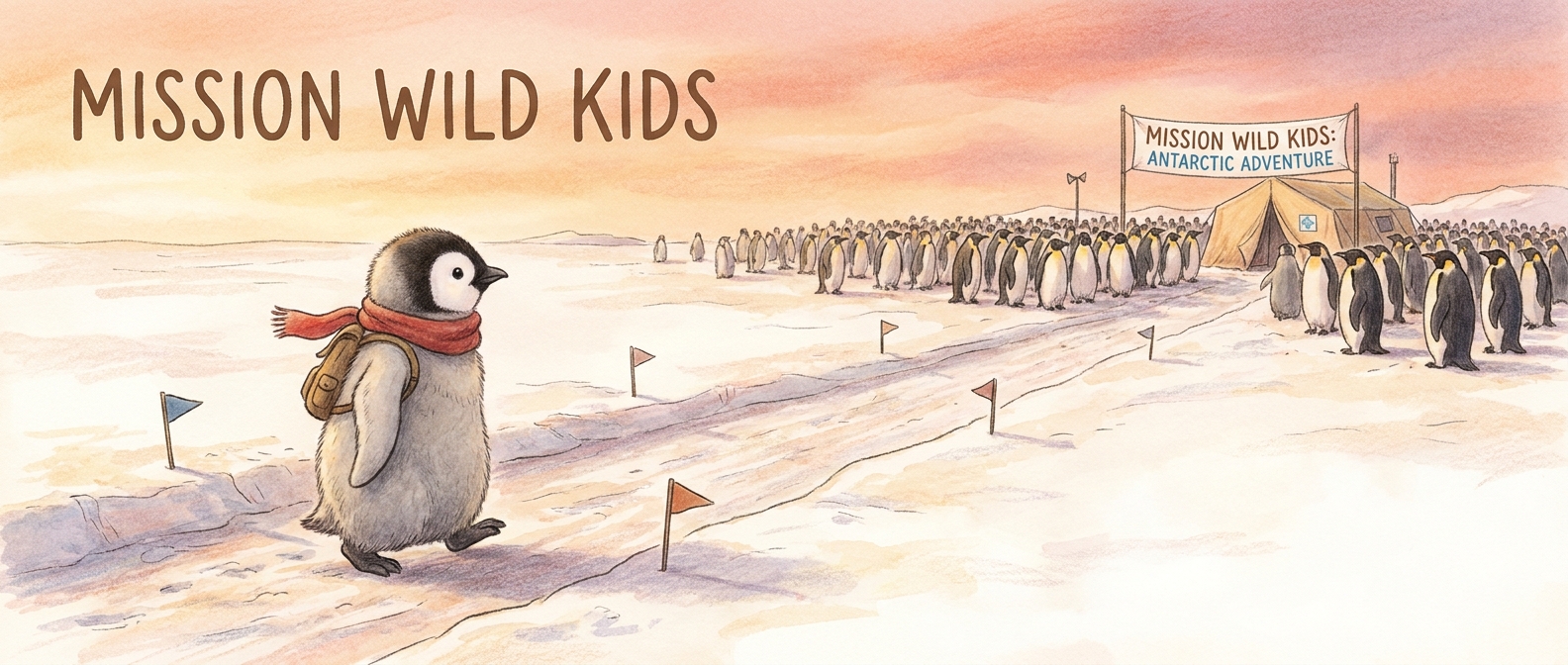
The wind is sharp, the ice is cracking, and one young penguin is sliding toward the wrong edge of the colony path. Read the ice, trust the safe route, and help Pip waddle home before the storm hits.
Story setup
The world is white, blue, and bright enough to make your eyes squint. Wind sweeps powder snow across the ice. Far ahead, a penguin colony huddles in a tight black-and-white cluster against the cold. Then you see Pip, a young penguin, sliding farther from the safe group path and too close to a stretch of unstable ice.
Pip is brave, curious, and built for cold, but even penguins need the right route. On sea ice, a wrong crack, a slippery edge, or one patch of thin frozen surface can turn a simple crossing into danger fast.
Your mission is to read the ice like a map, avoid the weak spots, and help Pip return to the colony path without pushing him toward the storm edge.
Mission score:0/5
Start the mission
Mission toolsIce cracks, snowdrift clues, wind direction, colony paths, and calm movement
Learning goalUnderstand how animals move across ice, why group paths matter, and how surface clues reveal safe and unsafe ground
Mission pressureThin ice, wind, freezing spray, and a penguin drifting away from the safest route home
Start missionPip needs the stable colony route, not the shiny dangerous shortcut.
Rescue step 1
Read the ice surface
🐧
You see two ice paths ahead. One is smooth and shiny near dark water. The other is rougher with packed snow and lots of penguin footprints. Which route looks safer first?
What you learned
Animals often create safer repeated routes. On ice, packed snow, old tracks, and group movement can reveal better footing than shiny untouched surfaces.
Pip waddles across the packed snow lane, slips between two larger penguins, and disappears into the colony huddle just as the wind begins to rise. The dangerous ice is behind him now.
You helped Pip the Penguin by trusting the colony route, reading the ice clues, and choosing shelter over shiny shortcuts.
Badge unlockedIce Path Finder earned
Mission result
You solved the ice world by reading the surface like a real explorer, tracks, cracks, shelter, and group paths.
What you learned
Penguins depend on safe group routes, stable ice, and shelter from the wind. In cold habitats, bad footing can become real danger fast.