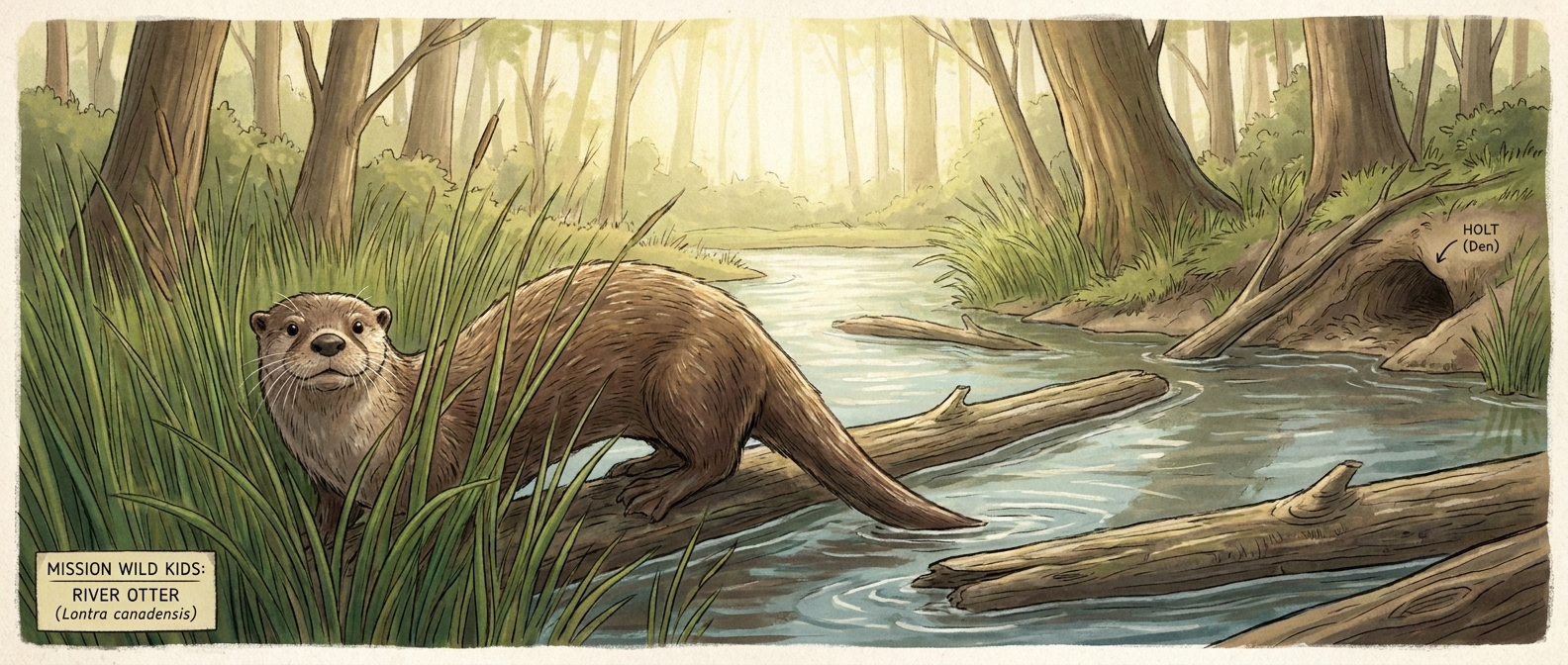
The river is moving fast, the reeds are shifting, and one playful young otter has drifted toward the wrong channel. Read the water, trust the clues, and help Ollie find the safe path home.
Story setup
The river flashes silver in the morning light as it curves through tall reeds and fallen logs. Dragonflies skim the surface. Water bumps softly against the bank. Then you hear a splash, quick and playful, followed by a worried chirp.
A young otter named Ollie has slipped away from the calmer side channel and drifted toward a faster stretch of water. He is quick, curious, and built for swimming, but even good swimmers can get pulled into the wrong place if the river changes faster than they expect.
Your mission is not to dive in and grab him. Your mission is to read the flow, spot the safe path, and make smart choices that help Ollie work with the river instead of against it.
Mission score:0/4
Start the mission
Mission toolsRead the current, use cover, follow floating paths, and choose calmer water
Learning goalUnderstand how rivers move, how otters stay agile in the water, and why safe channels matter
Mission pressureFast current, slippery logs, shifting reeds, and a playful otter moving too close to the rough water
Start missionOllie is fast and playful, but the river still decides which path is safe.
Rescue step 1
Read the current
🌊
Ollie bobs near a split in the river. One side is smooth and steady. The other is loud and choppy. What do you notice first?
What you learned
Rivers do not move the same way everywhere. Calm side channels, slower bends, and protected edges often create safer swimming paths than the strongest middle current.
A line of floating logs and branches forms a broken path across the quieter water near the reeds. Ollie can move fast, but only if he picks the right route.
What you learned
Otters are strong swimmers, but they still use the shape of the river to their advantage. Cover, bends, and floating obstacles can help them move with less risk.
The reeds bend toward a slower pocket of water near the bank. The middle channel is louder now and throwing little waves over hidden rocks.
What you learned
River edges, bends, and reeds can create quieter pockets where smaller animals use less energy. Safe movement is often about reading flow, not fighting it.
At last, you spot the safer side channel curving back toward the family den area. Ollie pauses on a slick log, tail flicking, ready to choose.
What you learned
Otters are playful, but good movement still depends on safe routes, clear channels, and using the water intelligently. River animals survive by reading flow as much as speed.
Ollie darts across the floating path, hugs the reeds, and slips into the calmer side channel. In seconds he is gliding back toward the den, fast and smooth like he knew the answer all along.
You saved Ollie the River Otter by reading the river, choosing the safer channel, and making the water work for the mission instead of against it.
Badge unlockedOtter River Runner earned
Mission result
You solved this one by reading the river like a real explorer, calmer water, better cover, and smarter paths beat random speed every time.
What you learned
Otters are playful and athletic, but they still depend on the shape of the river. Flow, cover, and channel choice all matter when the current gets risky.
You unlocked the Otter River Dash mini game on the progress page. More new animal worlds can grow from here.
Adventure result
This mission shows kids that even playful animals survive by reading patterns, not just reacting fast.
Discussion question
Why was the calmer side channel safer than the fastest water in the middle?
Come back tomorrow
Try dolphin next for another water mission, or fox for a different kind of clue-reading challenge.
What kids learned
Rivers have calmer and faster channels, and safe travel depends on reading the flow
Otters use speed, agility, and water awareness together
Reeds, bends, and floating cover can help create safer movement paths
Small animals often survive by working with the environment, not fighting it
Playful does not mean careless, good movement still depends on judgment
Badges earned
Otter River Runner
Current Reader
River Explorer
Parent and teacher note
This mission teaches current-reading, habitat observation, route comparison, and the idea that smart movement depends on reading the environment first.
Skills practiced: observation, comparison, prediction, and cause-and-effect thinking
Science concept: river flow, animal movement, and protective cover
Classroom extension: ask students to draw a river with a risky route and a safer route, then explain the clues